

If you are weighing custom millwork vs casework, the real question is not which one is better in the abstract. It is which one best supports the design intent, budget, schedule, and performance demands of the space you are building. In commercial interiors, that distinction matters quickly. A retail fixture wall, a hospitality reception desk, and a back-of-house storage run may all sit in the same project, but they do not need the same fabrication strategy.
That is where many teams lose time. "Millwork" and "casework" are often used interchangeably in early conversations, yet they point to different levels of customization, detailing, and project coordination. For architects, designers, general contractors, and owners, understanding the difference early can prevent redesigns, pricing surprises, and installation conflicts later.
Custom millwork vs casework: the core difference
Casework typically refers to box-based cabinetry and storage components built from standardized materials and construction methods. Think base cabinets, uppers, utility storage, and other functional units designed around repeatable dimensions. It can be manufactured efficiently, adapted to a project, and specified for many commercial applications where performance and consistency matter more than highly expressive detailing.
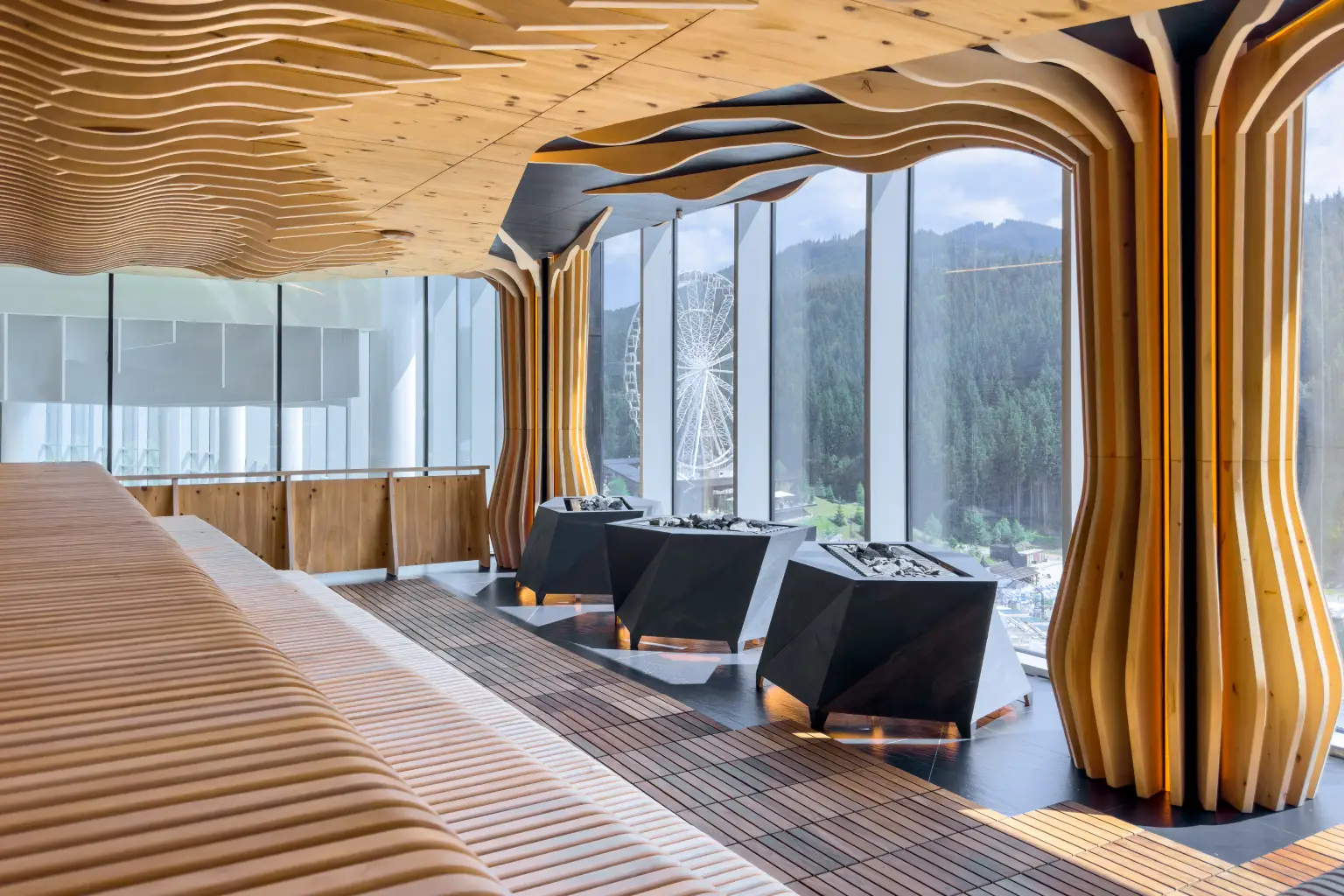
Custom millwork is broader and more architectural. It includes built elements fabricated specifically for the space, often with unique profiles, integrated finishes, feature details, branded components, or nonstandard geometry. Reception counters, wall paneling, banquettes, display systems, soffits, decorative cladding, and high-design cabinetry often fall into this category.
The simplest distinction is this: casework is usually product-oriented, while custom millwork is project-oriented. Casework is often selected, modified, and installed. Custom millwork is designed, engineered, fabricated, and fitted around the exact conditions and intent of the space.
Where casework makes the most sense
Casework is often the right answer when the program is straightforward and repeatability is an advantage. In medical offices, break rooms, classrooms, utility zones, and some multifamily or retail back-of-house environments, the priority is usually function, durability, and speed. Clean lines, dependable storage, and cost control tend to drive the decision.
That does not mean casework is low quality. Well-built casework can perform extremely well and present a polished result. The benefit is that it relies on rationalized dimensions, familiar hardware, and more predictable fabrication workflows. When a project needs multiple similar units across several rooms or locations, casework can help maintain consistency while protecting schedule.
It is also useful when design changes are still happening late. Because casework systems are more standardized, revisions can sometimes be absorbed with less disruption than highly bespoke fabrication. That flexibility can be valuable on fast-moving commercial projects.
Where custom millwork earns its value
Custom millwork becomes essential when the built environment needs to do more than store items or define basic work zones. It is the better fit when the millwork itself carries part of the brand expression, guest experience, or architectural identity.
In a hospitality setting, for example, the front desk may need curved forms, integrated lighting, stone coordination, concealed access panels, and a finish sequence that aligns with the interior palette. In a retail environment, display fixtures may need exact brand dimensions, product-specific merchandising logic, and durable detailing that can survive heavy traffic. In corporate interiors, a feature wall or conference credenza may need to align precisely with glazing, audiovisual integration, and surrounding architectural elements.
This is where custom fabrication changes the outcome. Rather than forcing the design to fit a predetermined cabinet logic, the fabrication strategy is developed around the project itself. That allows for more exact alignment with field conditions, more refined detailing, and better integration with other trades.
The cost question is more nuanced than it sounds
Many buyers assume casework is always the economical option and custom millwork is always the premium one. Broadly speaking, that is often true, but it is not the whole story.
Casework usually has a lower unit cost because it benefits from standardization. Materials are more predictable, shop workflows are more efficient, and engineering requirements are lighter. If the application is functional and repetitive, casework can be the financially disciplined choice.
But projects become expensive when the specified solution fights the space. If standard casework requires heavy field modification, filler work, awkward transitions, or visible compromises at key architectural moments, the savings can erode quickly. The same is true when casework cannot properly accommodate MEP coordination, accessibility constraints, or brand-driven design requirements.
Custom millwork costs more because it asks more of the process. It often involves deeper design coordination, shop drawing development, material selection, prototyping, CNC programming, finish management, and installation planning. Yet on projects where exact fit and visual impact are central, that added investment often reduces downstream friction and delivers a stronger result.
Lead times and coordination realities
Schedule is another point where teams need clarity early. Casework can often move faster because the construction methods are more repeatable and engineering is less complex. On phased rollouts or tenant improvement projects with tight windows, that speed matters.
Custom millwork usually requires a longer runway. Not because it is inefficient, but because precision takes coordination. Measurements have to be right. Adjacent finishes have to be confirmed. Details need approval before fabrication begins. If the project includes specialty materials, integrated fixtures, or unusual profiles, procurement and shop sequencing need even more attention.
That said, lead time should be measured against total project risk, not only shop duration. A faster fabrication path is not actually faster if it creates installation delays, field fixes, or owner dissatisfaction. The most reliable approach is the one that aligns fabrication complexity with the actual demands of the environment.
Custom millwork vs casework in design-driven spaces
For design-forward commercial interiors, the choice often comes down to where the visual hierarchy sits. If the cabinetry is largely background infrastructure, casework may be enough. If the built elements are intended to define the experience of the room, custom millwork is usually the better path.
This is especially true in branded environments. A customer may not know the term "architectural millwork," but they recognize when a reception desk, feature wall, display run, or service counter feels intentional. The reveal lines are cleaner. The proportions make sense. The materials transition with confidence. Those details do not happen by accident.
Design teams also need to think about tolerance. Standardized casework works best when conditions are predictable. Custom millwork is more forgiving of architectural complexity because it is created around actual dimensions and conditions, not idealized ones. In older buildings, remodels, and mixed-material interiors, that matters.
How to decide which approach fits the project
A useful way to frame the decision is to separate the project into performance zones. Some areas call for efficient, durable, repeatable cabinetry. Others deserve tailored fabrication because they are customer-facing, brand-critical, or architecturally sensitive.
A grocery remodel is a good example. Back-of-house storage and utility cabinetry may be best served by casework logic. Front-end service counters, branded fixture elements, specialty displays, or integrated wall features may require custom millwork. The strongest projects are not dogmatic about either category. They use each where it creates the most value.
That is also why an experienced fabrication partner matters. The question is not only whether something can be built as casework or millwork. It is whether the chosen method supports constructability, finish quality, installation flow, and long-term use. Teams that understand both sides can rationalize the package instead of overbuilding some areas and underdelivering in others.
What professional buyers should ask early
Before specifications are finalized, it helps to ask a few direct questions. Is this element functional, expressive, or both? Will it be repeated, or is it unique to one location? How visible is it to end users? Does it need to integrate with lighting, signage, stone, metal, or specialty finishes? Are field conditions stable enough for standardized dimensions, or will the project benefit from fully coordinated custom fabrication?
Those answers usually point to the right path. They also create better conversations between design teams, estimators, fabricators, and installers. When the fabrication approach is matched to the real demands of the project, pricing is clearer and execution is smoother.
For Texas commercial projects that need both architectural intent and operational control, that alignment is often the difference between a space that merely functions and one that feels resolved. Einstein Millworks works in that space every day, where fabrication is not just a line item but a visible part of how the project performs.
The best choice is rarely about picking a side. It is about knowing where standardization helps, where customization matters, and where the finished environment deserves more than a close enough fit.