



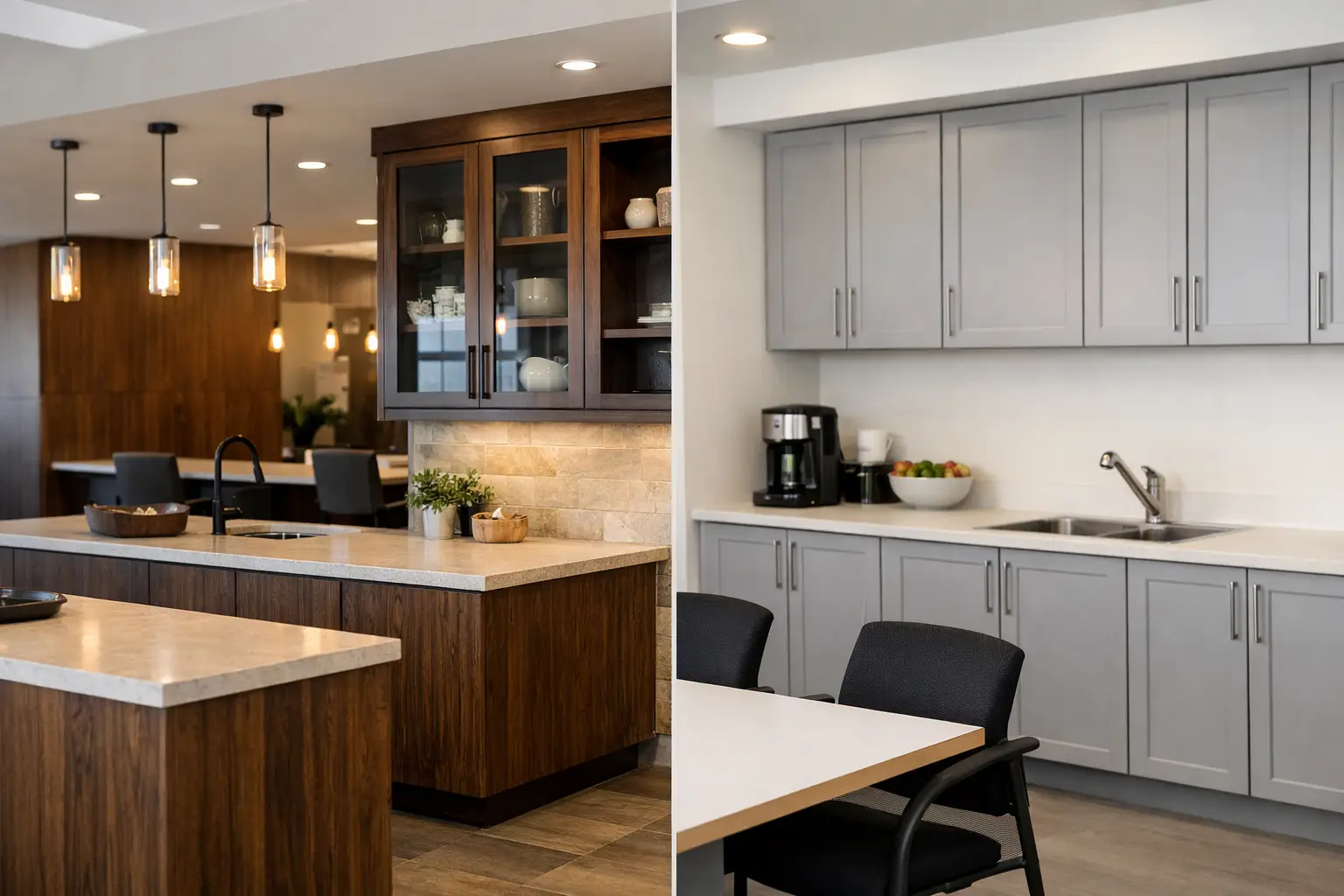
A cabinet decision usually looks simple on paper - until the project has real constraints. A branded retail rollout needs consistency across locations. A hospitality concept wants a specific finish, reveal, and lighting detail. A healthcare or office environment has clearance, durability, and code considerations. That is where the question of custom vs standard cabinets stops being a pricing exercise and becomes a project strategy decision.
For commercial teams, the right answer depends less on a generic good-better-best hierarchy and more on how the cabinetry needs to perform inside the space. Budget matters, of course. But so do scheduling, installation conditions, brand standards, maintenance demands, and how closely the final result needs to align with the design intent.
Custom vs standard cabinets: the real difference
Standard cabinets are manufactured in preset sizes, common configurations, and limited finish options. They are designed for repeatability. In the right application, that can be efficient and cost-effective, especially when the space is straightforward and the design requirements are flexible.
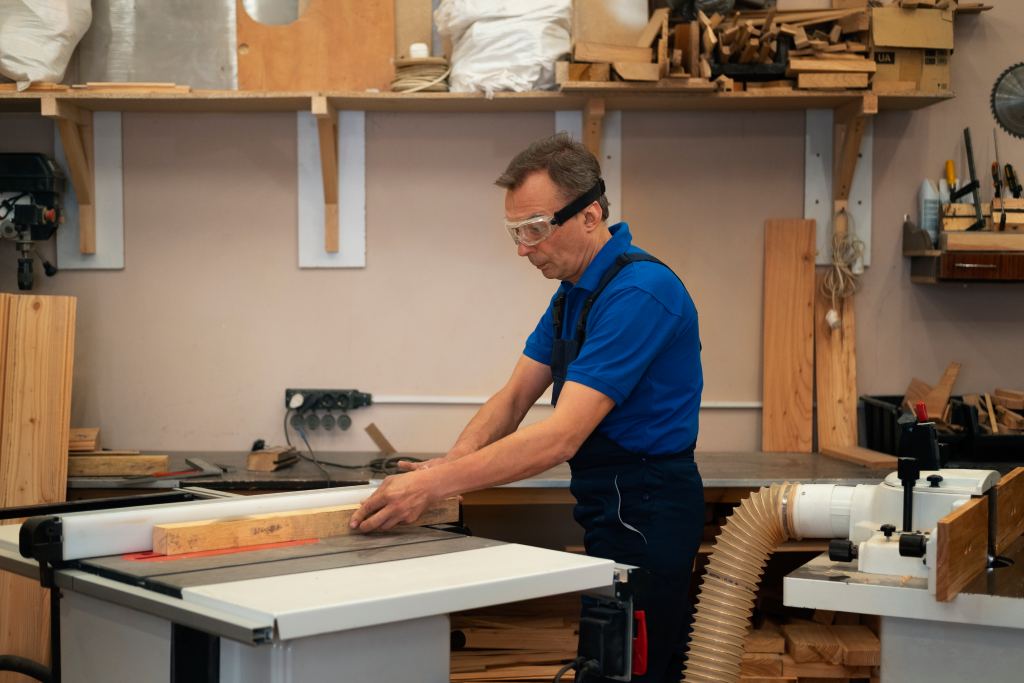
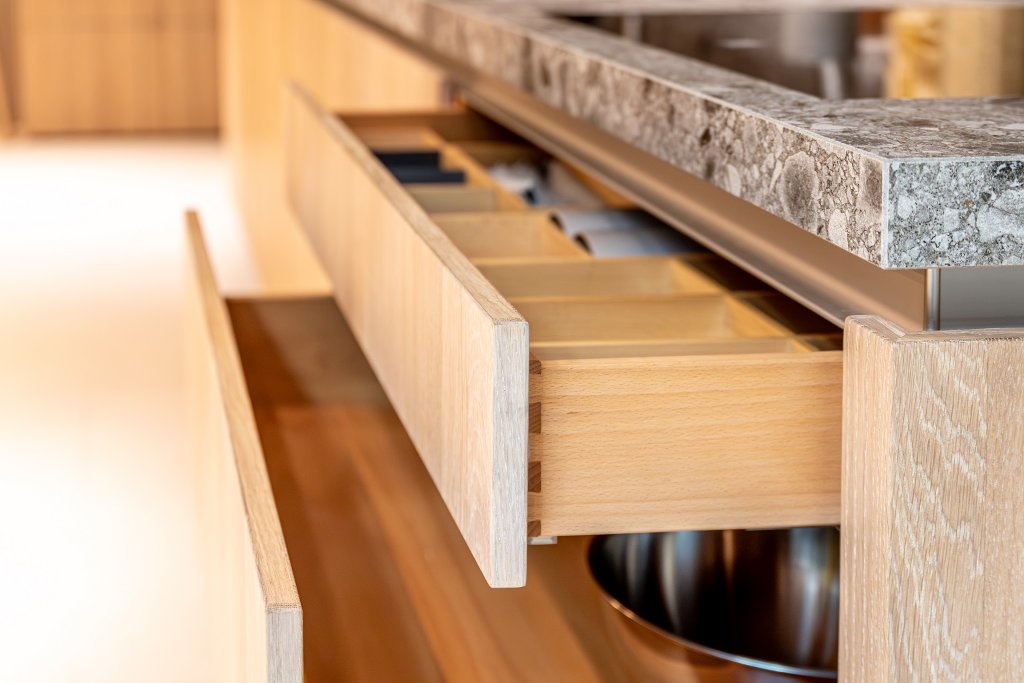
Custom cabinets are built to the project rather than fitted into it. Dimensions, materials, interior storage, hardware, edge conditions, and finish specifications can all be aligned to the intended use of the environment. In commercial settings, that flexibility often matters far beyond aesthetics. It can affect traffic flow, equipment integration, service access, and the overall quality of the built space.
The distinction is not simply custom equals premium and standard equals basic. The better lens is control. Standard cabinetry limits variables. Custom cabinetry gives the project team more control over those variables.
Where standard cabinets make sense
There are projects where standard cabinets are the practical choice. Back-of-house spaces with uncomplicated layouts, utility rooms, temporary fit-outs, or projects with aggressive budget compression may not require a fully customized millwork package. If the cabinet sizes work, the finish range is acceptable, and the installation conditions are predictable, standard products can keep procurement moving.
They can also support speed when the selection is made early and the supply chain is stable. For straightforward environments, standard cabinets reduce decision volume. That can help teams that are balancing multiple scopes and need to reserve custom fabrication for the parts of the project that are most visible or technically demanding.
Still, the efficiencies of standard cabinetry depend on the project conforming to the product. Once field conditions become irregular, or the design calls for exact alignment with other architectural elements, those savings can narrow quickly.
The hidden limits of standard products
Preset widths and heights may sound manageable until they create filler panels, awkward gaps, or misalignment with soffits, fixtures, and adjacent finishes. The issue is not only visual. In commercial environments, those compromises can affect usable storage, workflow, and the perceived quality of the space.
Finish limitations are another common pressure point. A retail operator may need cabinetry to match a brand palette across several locations. A designer may need a specific veneer cut, texture, or sheen level to support the rest of the interior package. Standard offerings rarely provide that degree of control.
There is also the matter of durability. Not every standard cabinet line is built for high-use commercial traffic. Hardware cycles, substrate quality, edge resilience, and cleanability all deserve closer scrutiny when the cabinets are expected to perform in public-facing or operationally intense settings.
Why custom cabinets often win in commercial projects
Custom cabinetry is often the better fit when the environment itself is part of the brand experience. In retail, hospitality, workplace, healthcare, and mixed-use interiors, millwork is rarely just storage. It shapes circulation, frames product presentation, supports service functions, and communicates quality.
With custom work, the cabinetry can be designed around actual use conditions instead of average assumptions. That may mean integrating specialty equipment, accounting for unusual wall conditions, coordinating with lighting and signage, or designing fixture elements that support both display and back-end operations. It also means the project team can resolve details before fabrication rather than forcing adjustments in the field.
For architects and designers, that level of control protects the concept. For contractors and operators, it can reduce avoidable installation conflicts and post-installation revisions. In that sense, custom cabinetry is not only a design choice. It is often a coordination advantage.
Customization is not just about appearance
One of the most common misconceptions is that custom cabinets are mainly about luxury finishes or visual distinction. In commercial interiors, the stronger argument is often functional precision.
A reception desk may need concealed cable management, accessible transaction surfaces, integrated lighting, and durable face materials at high-contact points. A grocery remodel may require fixtures sized to merchandise strategy and circulation patterns. A branded office project may need storage, work surfaces, and architectural millwork to read as one cohesive system. These are not cosmetic upgrades. They are performance requirements.
That is why custom fabrication tends to create more value when the cabinetry interacts directly with operations, customer experience, or technical systems.
Cost is more nuanced than it looks
Custom cabinets usually carry a higher upfront cost than standard options. That part is straightforward. What is less straightforward is how cost should be measured across the life of the project.
If standard cabinets require extensive fillers, workarounds, site modifications, or design compromises, the apparent savings can erode. If replacement cycles are shorter because the product was not built for the use case, the long-term value shifts again. And if a brand-driven environment loses impact because the millwork feels generic or inconsistent, there is a business cost that may not appear on the cabinetry line item.
Custom cabinetry asks for more investment because it solves for more variables. The question is whether those variables matter to the project. In many commercial settings, they do.
That said, not every area deserves the same level of customization. Many successful projects take a selective approach - custom where visibility, complexity, or brand expression is highest, and more standardized solutions where utility is the priority. This is often the most disciplined way to balance quality and budget.
Timeline, procurement, and installation considerations
Standard cabinets are often assumed to be faster. Sometimes they are. But speed depends on availability, specification stability, and how much adaptation is needed once the products arrive. If the space requires substantial adjustment to accept standard units, installation can slow down quickly.
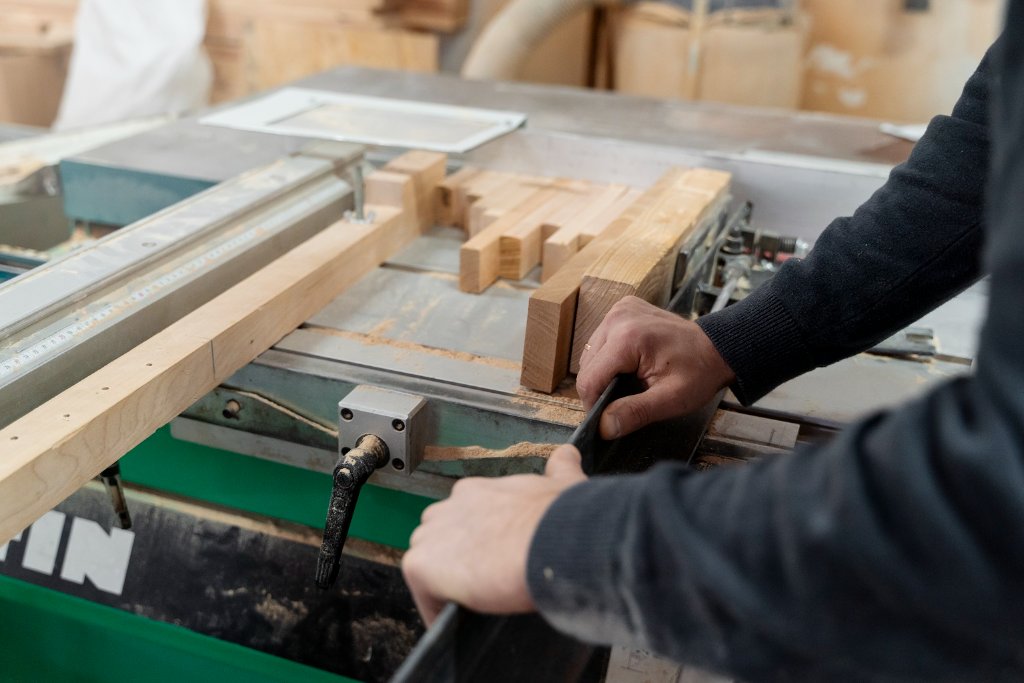
Custom cabinets generally require more lead time upfront because design development, approvals, engineering, and fabrication are part of the process. Yet that structure can improve predictability, especially on projects where precision matters. When fabrication is coordinated around field conditions and installation sequencing, the downstream process is often cleaner.
For commercial teams, this is a key distinction. Fast procurement is not the same as efficient delivery. The better question is which path creates fewer disruptions across the full project schedule.
How to choose the right path
The best decision starts with the role cabinetry plays in the space. If cabinets are primarily utilitarian, the layout is conventional, and finish expectations are modest, standard products may be fully adequate. There is no reason to over-engineer a simple requirement.
If the cabinetry needs to support a distinct customer experience, align tightly with an architectural concept, withstand heavy use, or solve irregular site conditions, custom is usually the stronger move. That is especially true when the millwork package needs to coordinate with other fabricated elements or installation scopes.
It also helps to evaluate the project through three filters: visibility, complexity, and repetition. Highly visible areas justify stronger design control. Complex areas benefit from exact fabrication. Repetitive programs, especially across multiple sites, may justify a custom system that can be standardized at the brand level rather than pulled from an off-the-shelf catalog.
For teams operating across Texas markets, this is often where a full-service fabrication partner adds value. A company like Einstein Millworks can align design intent, manufacturing precision, and installation execution so the cabinetry is not treated as an isolated purchase, but as part of the larger built environment.
Custom vs standard cabinets in practice
Most sophisticated commercial projects do not treat this as an all-or-nothing choice. They use custom cabinetry where it earns its keep and standard solutions where they are sufficient. A retail environment might use custom cash wrap and feature fixtures, then simplify storage in employee-only zones. A hospitality project may invest in custom public-facing millwork while standardizing select back-of-house components.
That approach tends to produce the best outcome because it respects both design ambition and operational discipline. It also avoids a common mistake - spending on customization in low-impact areas while accepting compromise in the spaces clients, guests, or customers actually remember.
The right cabinet strategy should make the project feel more resolved, not more complicated. When the cabinetry fits the architecture, supports the use case, and holds up under real conditions, the choice usually proves itself long after installation is complete.